
Comments
Comments from September 18, 2026.
It is fair to say that market participants will give you little pushback if you were to state that board road is the one of the least glamourous items for which HMR/Fastmarkets collects pricing in the three hardwood-producing regions.
Used most often in mats for large-scale energy or industrial construction projects, board road is typically made from lower-grade Oak due to its density and toughness but can be cut from a mix of hardwood species. While its utility is obvious, board road is not going to win any prizes for its overall appearance.
In recent years, mostly steady reported prices led to little change in HMR’s board road listing and range, but this summer has been different. The published listing for Southern board road has increased $80 per thousand board feet ($/MBF) over the last three weeks to $635/MBF, the highest since HMR started pricing the item in March 2006.
The crosstie downturn across the Southern states has played a role in this, as green sawmills have looked for different buyers for lower-grade material. For months, contacts have told HMR/Fastmarkets that the mat market has been hot this year, with data center construction providing additional market momentum.
Overall, the Southern hardwood market remains quiet this week. Upward movement for green 5/4 and 6/4 #2A&3A Red Oak and cooling for kiln-dried #1C&Btr Red Oak are the most notable moves from a price perspective.
ASH: Interest in thick green Ash continues in the South, with reported prices necessitating increases to all grades of 8/4. Outside of those moves, Ash markets, both green and kiln dried, remain well balanced. International buyers have shown less interest in Southern Ash in recent weeks, leaving domestic customers more options.
#2A&3A OAK: Increased purchasing by truck trailer flooring plants drives the latest round of price increases for #2A&3A Red Oak, with the two grades in both the 5/4 and 6/4 thicknesses receiving bumps. Contacts at green sawmills west of the Mississippi River have been benefiting the most from recent activity, though there are signs that the trend could spread across the region. There are no changes to the #2A&3A White Oak listings in this edition. Residential flooring plants are known to be buying as well but are well covered by available inventories of 4/4 #2A&3A Oak.
RED OAK: Apart from increases to 5/4 and 6/4 #2A&3A, the only other price changes for Red Oak are reductions to the kiln dried 4/4 #1C&Btr listings and most range numbers. Sources tell HMR/Fastmarkets that there is little enthusiasm for Southern Red Oak in exports markets, most notably China, which is overshadowing steady activity in domestic markets.
WHITE OAK: Reports about interest in Southern White Oak are mixed. Some contacts describe kiln dried 4/4 Fas as a good seller, while others say they struggle to move anything that is #1C&Btr. International demand remains cool for the species, especially from Chinese buyers. Reported prices bear out weakness for kiln dried 4/4 #1C, with decreases to both ends of the ranges. There are no other price changes for dry stock. On the green side, the listings for 5/4 Fas&1f increase for the fourth straight week, climbing $165/MBF over that period. Sellers indicate the gains are almost entirely driven by lack of supply. The 4/4 and 5/4 #1C listings also rise.
POPLAR: The market for Southern Poplar is well balanced, with consumption of both green and kiln dried stocks accommodated by the region’s production. Several survey respondents listed the species as one of their top sellers lately, though this is yet to translate into broadly higher reported prices. Vietnamese clients are buying kiln dried Poplar in decent quantities, though limited Chinese interest has been noted by many this summer. All the green and kiln dried listings and ranges stand pat.
BOARD ROAD, FRAMESTOCK, CANTS & TIES: Area contacts continue to talk about an improving picture for mills that cut crossties in the South. Tie quotas are being loosened by some treaters in the region, though observed prices are adequately covered by the published ranges for both sides of the Mississippi River. The hardwood pallet cant market remains sluggish, with no price changes necessary.
Demand for Oak and Mixed Species framestock is also slow, meaning no changes are needed to their ranges in this issue. Board road, mat timbers, and crane mats continue to garner positive comments from those who cut them. Reported prices lead to a third straight week of increases for the board road listing and both ends of the range.
Comments from September 18, 2026
Hardwood sawmill production in the Appalachian region rose 6% in August from July, matching the increase in the South but lagging 12% expansion in the North, according to estimates by HMR/Fastmarkets. Total production across the Eastern hardwood producing region advanced 7.4%, supported by one additional working day in August than in July, and nudging up the annualized pace of production through August to 4.083 billion board feet.
Log supplies are level-to-lower, while contacts report flat-to-slower green and kiln dried lumber sales. Chinese demand is weak, according to all Appalachian survey responses over the last two weeks. “The last of the high-cost stocks have arrived at Asian ports,” said one exporter, adding, “Many manufacturers are left holding lumber inventories as their production has slowed.” Meanwhile, demand from the pallet sector for cants and pallet lumber remains quite good.
ASH: Market conditions for Appalachian Ash are favorable, from a producer’s perspective, due to the diminishing supply of healthy Ash trees across the region. Mills sawing Ash logs from pockets not heavily impacted by the Emerald Ash Borer are having no trouble moving their full production. Previous adjustments have most of the green listings in order. The only change lowers the listing for 8/4 #1C by $10 per thousand board feet ($/MBF). Kiln dried Ash is moving well, mainly for export to China. Prices gathered this week keep all the listings and ranges in check.
BASSWOOD: Basswood activity tends to increase when window blind and shutter producers are busy, or when Poplar becomes tougher to procure, because the former is a substitute for the latter. Neither of these circumstances is evident at the present time. Basswood sales are sluggish. However, production of the species has been low for an extended period, keeping inventories manageable. No changes are warranted to any green or kiln dried prices.
CHERRY: The relative ease with which sawmill operations were moving green Cherry months ago has downshifted, coinciding with concentration yards reducing purchases in response to declining demand from China. Cherry exports to China slowed for a fourth consecutive month in July after peaking for the year in March. Green production is falling alongside lower demand in each producing subregion. On the dry side, excess supply relative to slower demand is still evident for 5/4 through 8/4 #1C in the North Central subregion, prompting reductions to those listings as well as the low-end ranges for 6/4 #1C.
HICKORY: Kiln dried Hickory is moving well in all grades and across most characteristics and specifications, including Rustic and Calico. Reported prices are sufficient to raise the 4/4 #1C&Btr ranges and all #2A figures. Purchases of green Hickory by residential flooring plants haven’t shown signs of slowing. Concentration yards are also in the market for decent quantities. Information lifts the listings for 4/4 through 8/4 #2B again this week, continuing the upward trend that began the third week of August.
HARD MAPLE: While this species is moving slowly for most Appalachian producers, it has appeared less frequently of late on sellers’ lists of worst-moving items. Still, downward price pressure is noted for green Hard Maple this week, driving decreases to the 5/4 through 8/4 #1C&Btr listings in each color sort. The listing for #1&2 White 4/4 #1C is also reduced. Lower reported prices are prevalent for kiln dried 4/4 and 5/4 Hard Maple, with reductions warranted to the listings and noted ranges for 4/4 Fas, 5/4 Fas, and 4/4 #2A in both color classifications. Reported prices for 6/4 #1C have a clear upward bias, however, with scarcity outweighing limited demand; the #1&2 White and Unselected listings and ranges are raised accordingly.
SOFT MAPLE: Supplies of this species have become more closely aligned with tepid demand, halting downward price movement for green items this week. Markets are absorbing most kiln dried production, with sales reportedly stronger for #1C&Btr than for #2A, according to survey respondents. Reductions to the 8/4 #2A listings and ranges in each color sort result from weak demand, whereas the high-end ranges for Sap&Btr 6/4 Fas climb, mostly due to lack of supply.
#2A&3A OAK: Procuring adequate volumes of green #2A&3A Oak has not been an issue for most residential flooring manufacturers. Some are increasing Red Oak purchases to better align raw material inventories with demand for the strongest-selling finished goods, mainly No. 1Com Red Oak flooring. Purchase order volumes for some truck trailer flooring operations have varied during 2026, but current inventories are at desired levels at most plants. Reported and observed prices for #2A&3A Red Oak and White Oak, and for #2A Alone Red Oak, are steady, warranting no changes to any listings this week.
RED OAK: Demand for kiln dried Red Oak is not particularly good from domestic secondary wood products manufacturers, many of whom are only placing orders for just-in-time delivery. Meanwhile, exporters are experiencing slower sales and downward price pressure for #1C&Btr to China. Elevated freight costs and diminished shipping through the Strait of Hormuz resulting from the US-Iran war continue to impact sales of thicker-stock Red Oak to the Middle East and North Africa region (MENA). Items that would otherwise ship to MENA at regular intervals are instead going to China or other markets at reduced prices. The listings for 6/4 Fas are lowered. Green Red Oak supplies are meeting the market’s needs, and all the listings stand pat.
WHITE OAK: Markets for green and kiln dried White Oak are mostly stable, with domestic and export demand generally aligned with supplies. Reported prices did not shift much this week, resulting in few changes to the published figures. Only the kiln dried 5/4 Fas range numbers and 5/4 #1C listings decline. Kiln dried Fas White Oak sales to Europe tend to increase after European vacations end in August. Thus far, through mid-September, contacts continue to report flat-to-slow demand from the region’s largest markets.
POPLAR: Supplies of most green Poplar items are meeting the market’s needs. That is not necessarily the case for 4/4 and 5/4 Fas&1f, supplies of which have tightened in the last 30 to 45 days. Higher observed prices prompt $15/MBF gains to those listings. Domestic demand for kiln dried Poplar is decent, but interest from Asian markets lags exporters’ expectations. Lower reported prices drive reductions to the 8/4 #1C&Btr listings.
WALNUT: Green Walnut prices gathered this week align with those of prior weeks, allowing all the listings to stand. One kiln dried Walnut producer notes good demand across all grades and thicknesses, while others report higher demand for #1C and #2A than for Fas. Incoming prices warrant reductions to the listings and high-end ranges for 4/4 Fas and the listings for 5/4 #2A. US exports of Walnut logs in July were the second lowest for any month to that point in 2026. Still, shipments were easily the highest for any July on record, rising 51% over July 2025.
FRAMESTOCK, CANTS, TIES, & BOARD ROAD: Demand for Oak and Mixed Species framestock from upholstered furniture markets is low. Production is low, as well, allowing the Oak and Mixed Species framestock price ranges to stand.
The pallet market has energy. Manufacturers have adequate but not excessive hardwood raw material inventories and steady-to-stronger pallet sales. Mills are readily moving pallet cants. Observed and reported prices warrant gains to the cant listing and range.
Demand for 7×9 crossties hasn’t changed much since treating operations started managing inventories through quotas. As with the other regions, mills that saw ties in the Appalachian region are awaiting the results of railroad mergers and the subsequent impact on the number of ties needed for infrastructure construction and repair projects. The 7×9 crosstie ranges hold steady in both subregions.
No meaningful changes are evident in demand for board road, which has been the case throughout most of this year. Reported prices keep the listing and range intact.
Comments from September 18, 2026.
Northern region hardwood sawmill production rose 12% in August from July, according to HMR/Fastmarkets estimates, outpacing the respective 6% gains in the Southern and Appalachian regions. Increased production was largely driven by a rebound from the typical Fourth of July holiday slowdown that leads many sawmills to curb output. Total Eastern US hardwood sawmill production was at an annualized rate of 4.23 billion board feet (BBF) in August, up from 3.79 BBF in August 2025. August’s production uptick was evident in green Maple and Oak prices, which have been slumping.
As we move past Labor Day into the fall, several broad factors will be important to watch for market participants: fuel-price volatility, the potential return of Chinese demand, and whether the recent rally in pallet cant prices can be sustained.
ASH: Northern green Ash prices push higher across all grades and thicknesses for a second straight week. Fundamentals have been favorable for this species all summer, from a producer’s perspective. The spread of the Emerald Ash Borer across the North is keeping green supplies tight, and demand for kiln dried stock has been consistent from certain domestic markets. Sales contacts have frequently listed the species as a best-seller over the past several months. On top of all this, Ash has still been moving well for export to China, despite a notable summertime slowdown in shipments of species such as Red Oak to that country. A few dry-side increases are in order this week. The Fas listings are raised, along with the #2A listings and low-end range numbers.
ASPEN: Northern region Aspen prices have been fairly steady throughout the summer. Both the green and kiln dried listings are well above year-ago and start-of-year levels, mainly driven by limited production. Contacts have largely reported consistent inquiries for the species since the spring and have been moving their inventories at gradually firmer prices. However, some producers have recently noted a slowdown in demand, and downward price pressure was evident in kiln dried prices earlier this month. This week, no further adjustments are needed for any listings or ranges.
BASSWOOD: All green and kiln dried Basswood listings and ranges are unchanged this week in the Northern region. When you ask a Northern producer about Basswood these days you’ll struggle to find much enthusiasm. The species has been a commonly listed worst-seller in recent weeks, while not appearing on a single survey respondent’s best-seller list. Still, it’s been a steady summer for the species pricewise, as tight supplies are keeping fundamentals balanced, despite lackluster demand. Northern Basswood listings are currently well above year-ago levels following a sharp rally during the first quarter of this year, though like with most minor species, these gains are largely supply-driven.
BIRCH: Kiln dried #1C&Btr Birch prices hold steady this week following sharp declines during the first two weeks of September. Recently, some producers had to significantly lower their asking prices in order to move Unselected Birch. Sellers moving loads sorted for or otherwise containing high percentages of Sap&Btr lumber are garnering prices well above the current HMR/Fastmarkets listings, as buyer interest has been focused on that color sort throughout this year. That said, even Sap&Btr stock is not drawing as much interest as in the past, with recent comments about demand almost entirely negative. On the green side, mills are not eager to cut Birch given current market conditions. Consistent reported prices hold all the listings steady.
HARD MAPLE: All Northern kiln dried #1C&Btr Hard Maple listings fall this week in both color designations, along with several noted range numbers. As the summer progressed, comments about kiln dried Hard Maple demand shifted from almost entirely positive to mostly lukewarm. Recently, words like “oversupplied,” “slowing,” and “average” have been used to describe the kiln dried market. Hard Maple has not appeared on any Northern producers’ best-seller lists in recent weeks, while Brown Hard Maple has been mentioned as a worst-seller by a few producers. The market for green Hard Maple is similarly under downward pressure, especially for #1C&Btr lumber. While no changes are warranted to the listings this week, several sources believe they are poised for further declines, though a rebound in demand would not be uncharacteristic for fall and could help establish a price floor. For now, though, the #1&2 White 4/4 Fas listing is at the lowest level in roughly two-and-a-half years.
SOFT MAPLE: Consistent reported prices hold all Soft Maple listings and ranges steady, except for green Sap&Btr 4/4 Fas&Sel, which fall back. The species is still a slow sellers for most producers. It seems that Brown uppers are the only Soft Maple items attracting regular interest from buyers. Prices for Hard Maple uppers are still at sizeable discounts to Soft Maple, which is another factor limiting demand for the latter, according to market participants. Overall, the market for Northern Soft Maple has lacked energy since the spring, and a significant jump in demand will be needed to quell the current downward pressure on prices.
RED OAK: The Northern green Fas&Sel Red Oak listings fall this week across all thicknesses, as increased summertime production continues to weigh on prices. Green #1C&Btr prices have been under downward pressure since late June, and following this week’s declines, the Fas&Sel listings have given up nearly all the gains that occurred during the first half of this year. The green #2A&3A listings, on the other hand, have held firm on the back of tight supplies in the North. On the dry side, a few changes are in order. The 4/4 #1C listings and high-end range numbers are lowered, along with the high ends of the 4/4 Fas ranges and low ends of the 5/4 #1C ranges. Comments about domestic kiln dried Red Oak demand are still mostly positive. However, exports to China—which remain a key element of kiln dried Red Oak business—have not rebounded up to this point.
WHITE OAK: The green 5/4 #2A&3A White Oak listings are raised, as tight supplies are causing increased competition for available production in the North. Conversely, green #1C&Btr White Oak is still largely oversupplied in the region, and the 4/4 #1C listing is lowered in this issue. On the dry side, no adjustments are necessary to the published listings or ranges, though Fas seems to have the most energy of any grade. One producer in the Upper Midwest mentioned they were struggling to move short Fas as well as Rustic White Oak.
PALLET LUMBER, CANTS, TIES, & BOARD ROAD: The market for Northern pallet cants and lumber has been strong all summer, and that strength appears to be persisting as fall approaches. Comments about demand are almost entirely upbeat, though recent adjustments have all the pallet cant and lumber listings and range numbers in order.
Similarly, the market for 7×9 crossties in the North is performing better than earlier this year, as treaters in the region have raised or entirely removed quotas, particularly for primary suppliers. That crosstie range is steady this week.
The board road listing and range are also unchanged, as producers have been moving output for autumn projects at consistent prices.
Comments from September 18, 2026.
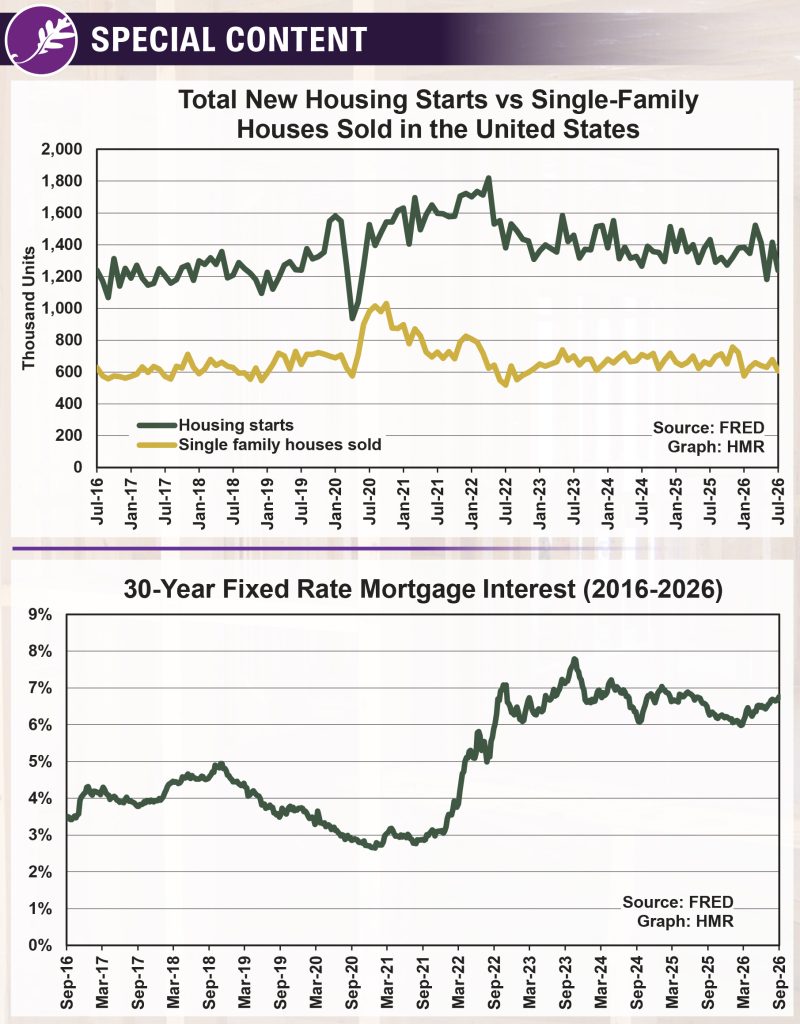
Production at US residential solid wood flooring factories was in line with expectations in August. Following declines over the prior two months, manufacturers’ shipments rose 7%, according to the HMR/Fastmarkets estimate. Elevated overland freight rates and the uneven dependability of for-hire trucks remain obstacles to timely shipments to distributors for certain manufacturers.
Finished goods inventories are adequate for some producers but low for others. One plant manager said his inventories have reached a two-year low. “The only product that remains in abundant supply for us is 2¼” No. 2Com Red Oak,” he said. “All other items are well under weekly replacement levels, and many are weeks oversold.” Relative scarcity of certain finished goods in a fair overall market continues to add upward price pressures, primarily for Red Oak flooring, as shown in this week’s pricing matrices.
Demand is generally stronger for No. 1Com than for Sel&Btr and No. 2Com items. Healthy demand for No. 1Com is having a pull-through effect on No. 2Com—high enough to move No. 2Com Red Oak and White Oak flooring at a decent pace, but not high enough to materially improve profit margins.
Meanwhile, Sel&Btr White Oak flooring remains a tough sell, though the sales pace is no longer painfully slow, as it was in the winter and spring of 2026. Price concessions are often required to move Sel&Btr White Oak. This is occurring longer into the year than contacts had been expecting. Including this week’s decline, the listing for Appalachian 3¼” Sel&Btr White Oak has fallen by $0.42 from the peak of $3.74 per square foot at the start of the year, equating to an 11% decrease. Contacts also report slow sales of 4” No. 1Com Red Oak and 5” Sel&Btr White Oak.
Supplying sawmills report steady to somewhat higher sales of #2A&3A Oak to flooring plants. Prices for Appalachian #2A&3A Red Oak are steady to firm, whereas prices for #2A&3A White Oak are flat. Published prices for Southern #2A&3A Red and White Oak recently registered gains, resulting partly from some residential and truck trailer flooring plants paying Appalachian prices for Southern lumber. Low log supplies and resulting constrained lumber production in the South also contributed.
September 18, 2026